


Genodermatoses
The skin is a complex organ whose homeostasis relies on coordinated interactions between keratinocytes, melanocytes, fibroblasts, and endothelial cells, which are essential for maintaining its integrity, pigmentation, vascularization, and repair capacity. Genetic and acquired diseases can disrupt these functions, leading to a wide range of skin phenotypes.
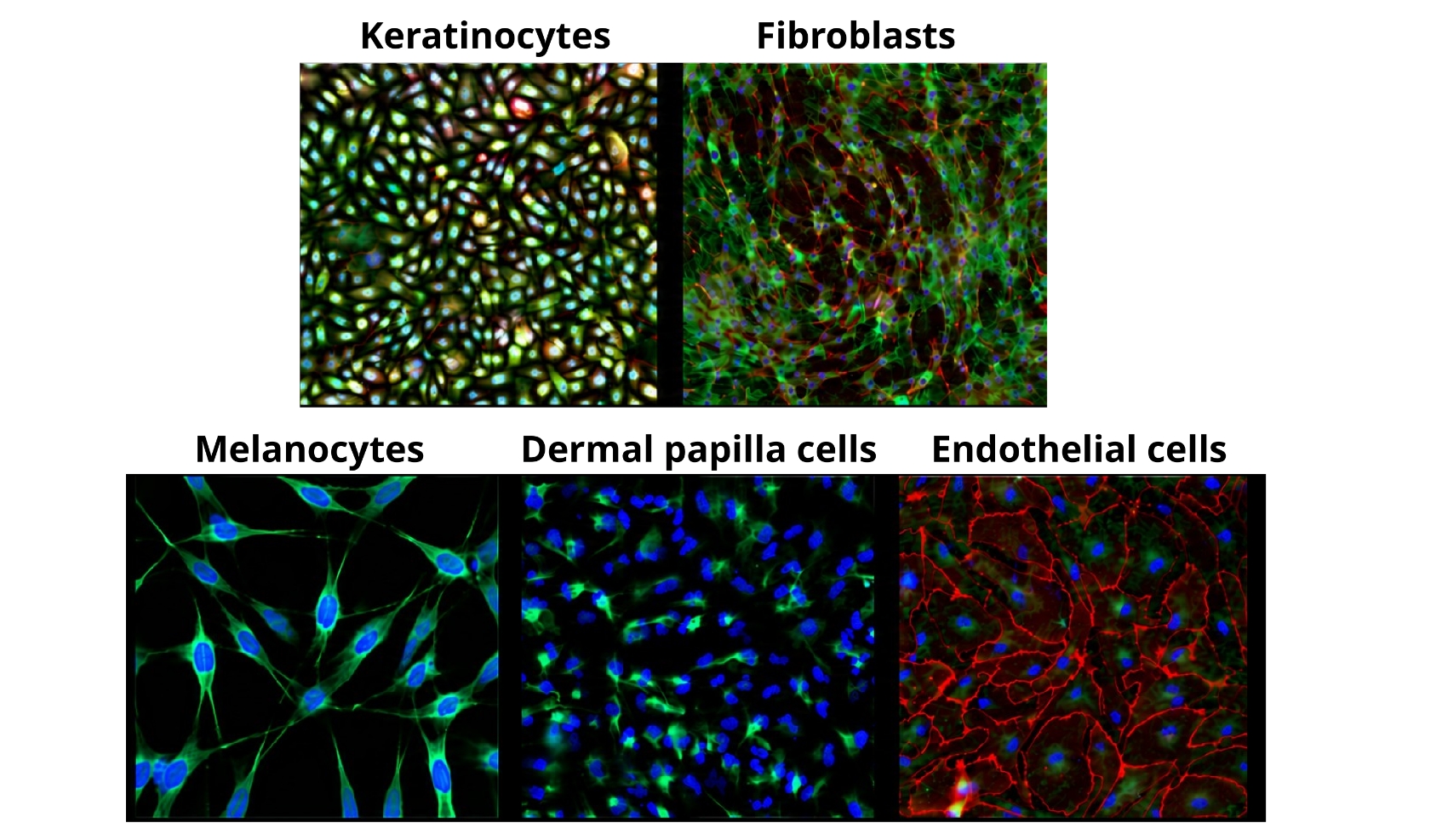
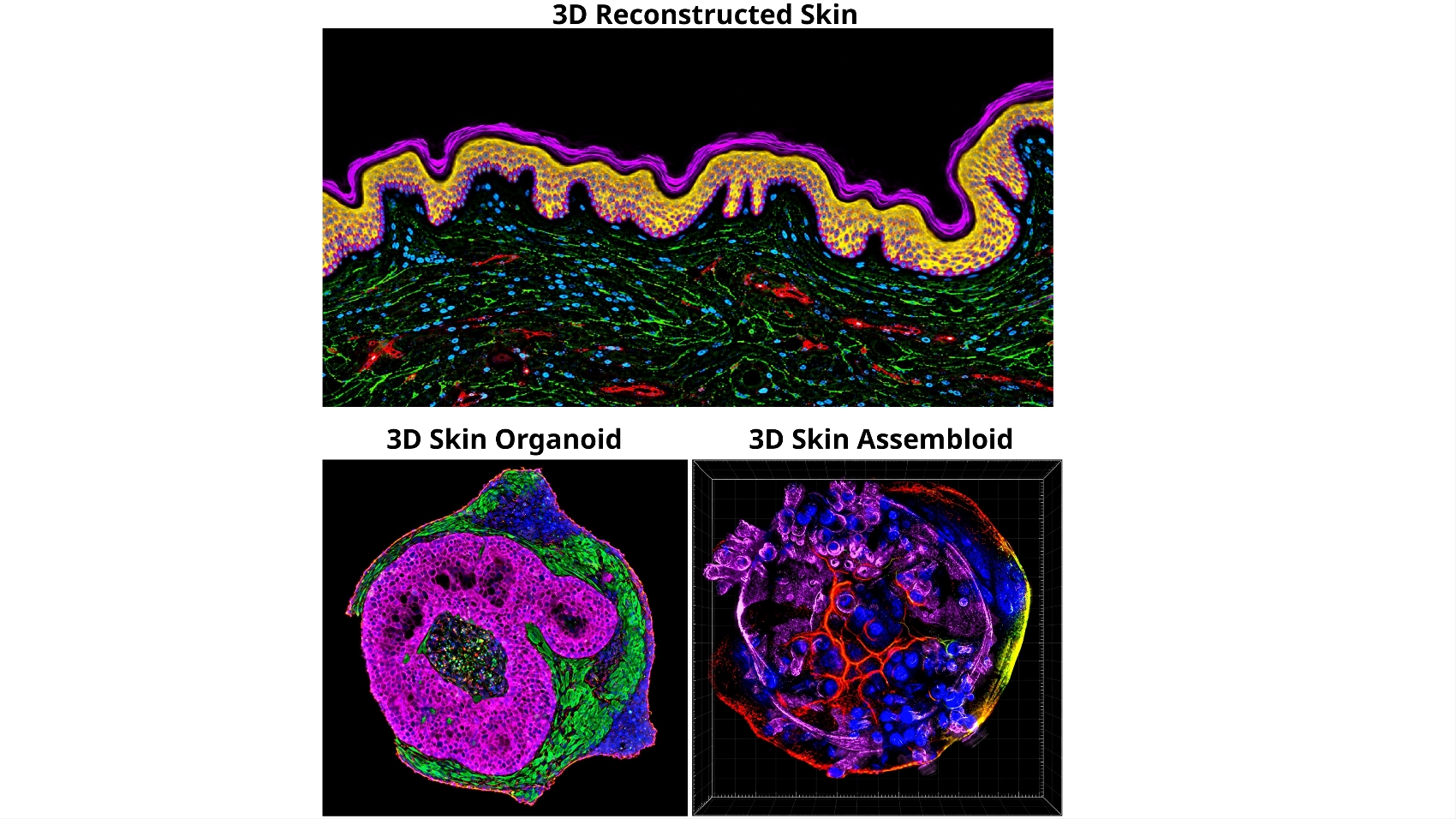
Our team uses human pluripotent stem cells (hPSCs), combined with genome editing and 2D and 3D skin models, to investigate the mechanisms underlying these disorders and develop novel therapeutic strategies. Our research spans the entire spectrum, from disease modeling and the investigation of pathophysiological mechanisms to regenerative medicine and clinical translation.
The team is co-led by Prof. Christine Baldeschi and Dr. Jennifer Allouche and is organized into two complementary research groups. It develops human pluripotent stem cell-based approaches for skin disease modeling, tissue engineering, and regenerative medicine.
The group led by Prof. Christine Baldeschi primarily focuses on cell therapy and tissue engineering strategies, with particular emphasis on keratinocytes and skin reconstruction. The group also develops models of keratinocyte-related disorders, including epidermolysis bullosa simplex, as well as innovative bioproduction and quality control approaches to support clinical translation.
The group led by Dr. Jennifer Allouche focuses on melanocyte biology and the modeling of pigmentation disorders and genodermatoses. The group develops human 2D and 3D models derived from pluripotent stem cells, combined with genome editing, to investigate diseases such as xeroderma pigmentosum, neurofibromatosis type 1, and vitiligo, and to develop novel therapeutic approaches, including cell therapy.
Both groups share expertise in pluripotent stem cell differentiation, genome editing, and 3D multicellular skin models, establishing a continuum from understanding disease mechanisms to developing innovative therapeutic strategies.
Keywords: Human pluripotent stem cells (hPSCs); genodermatoses; cell therapy; regenerative medicine; melanocytes; keratinocytes; pigmentation; 3D skin models; tissue engineering; vitiligo; xeroderma pigmentosum; neurofibromatosis type 1; epidermolysis bullosa.
Team members
Christine BALDESCHI
Co-Team Leader & University Professor (UEVE)
Christine joined I-Stem in 2007 as a professor at the University of Evry. At I-Stem, she is developing cell therapy and pathological modeling approaches for the treatment of skin disorders associated with genetic diseases, using pluripotent stem cell derivatives.
Manoubia SAIDANI
Engineer (CECS)
Manoubia joined the Genodermatoses team at I-Stem in 2008, and is involved in the development of skin cell models derived from pluripotent stem cells. These 2D and 3D models enable her to model skin pathologies such as epidermolysis bullosa and vitiligo.
Sophie DOMINGUES
Engineer (CECS)
Sophie has been working at I-Stem since 2011, as part of the Genodermatoses team’s PACE cell therapy project. This project aims to develop reconstructed skin in the laboratory that can be used as a biological dressing to treat skin ulcers linked to a genetic disease.
Annabelle DARLE
Engineer (CECS)
Annabelle joined the Genodermatoses team in 2015. She works on the PACE and STELLAR cell therapy projects. She is also interested in the mechanisms of stem cell differentiation into keratinocytes using molecular biology techniques.
Jennifer ALLOUCHE
Co-Team Leader & Researcher scientist (Inserm)
After a thesis completed at I-Stem in 2015 on the potential of pluripotent stem cells to model pigmentary diseases and a postdoctorate at Harvard on melanogenesis, Jennifer returned to I-Stem in 2020. Her research focuses on the development of new therapeutic strategies for vitiligo. In the Genodermatosis team, she has been responsible for pathological modeling of pigment disorders since 2023.
Tatiana SAOUDI
Engineer (CECS)
A member of the team since January 2021, Tatiana works on the Genesis project, in particular on the differentiation of human induced pluripotent stem cells into fibroblasts and their associated quality controls.
Marion CHALOT
Engineer (CECS)
Joining the team in 2022 after completing her PhD at the CEA, Marion is an associate researcher and head of the Genesis project in the Genodermatoses team. She is working on the creation of artificial skin for grafting using tissue engineering.
Bénédicte DE MUYLDER
Engineering Assistant (Inserm)
Assistant Inserm Engineer, joining I-Stem in September 2023. Bénédicte participates in the various cell therapy and modeling projects of the Genodermatoses team.
Pavel Malov
Ph.D. student
Joining I-Stem in 2025, Pavel is an engineer working on the modeling of xeroderma pigmentosum in a 3D systems within the Genodermatoses team.
Ali Nasrallah
Post-Doctorant (UMR)
Collaborations
Epidermolyse bulleuse Program
Stellar Program (BPI funding)
Stellar Program (BPI funding)
PACE Program
PACE Program
GENESIS Consortium
GENESIS Consortium
GENESIS Consortium
GENESIS Consortium
Vitiligo Program
Publications
UV irradiation drives lineage-specific MITF-mediated transcription of PD-L1 to confer immune tolerance to UV-mutated melanocytes.
08 September 2026
Immunity